Visiting Professor · UC Berkeley  ·  Research Affiliate · USI Switzerland  ·  PI & Founder, Arab AI Governance & Society Lab
Anis Ben Brik, PhD
Comparative Public Management · AI Governance & Society · Evaluation
MENA · Gulf · Global South · Europe · Comparative Cross-National Research

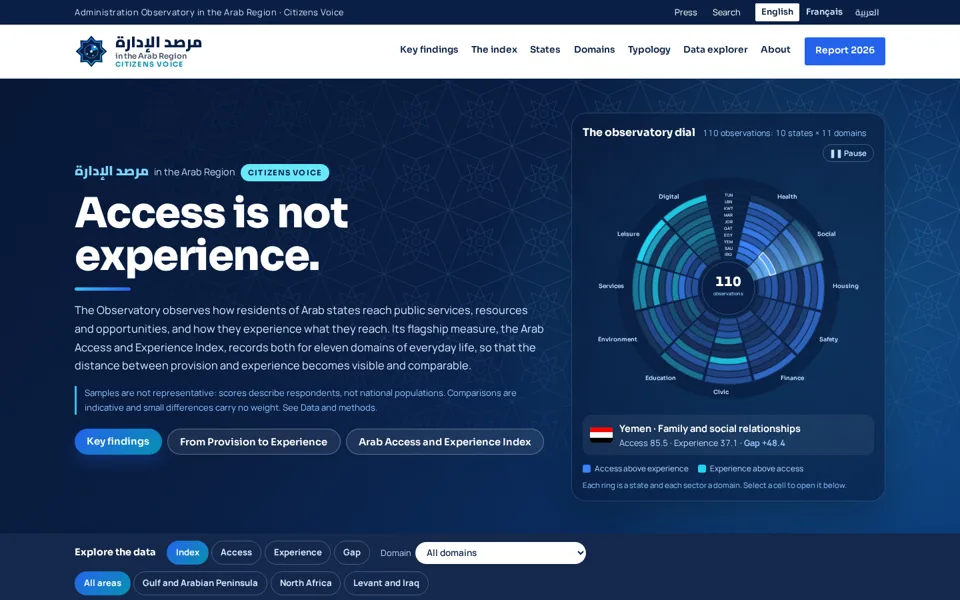
A research programme spanning three connected fields — comparative public management, AI governance and society, and evaluation. The work asks how public institutions function under varied conditions of authority, capacity, and information; how AI policies diffuse across uneven state capabilities; and how evaluation systems institutionalise evidence-based decision-making. Empirically grounded in 30+ countries across MENA, the Gulf, the Global South, Europe, Asia, and the Americas.

Three programmes, one research vision: institutions, accountability, and evidence. The empirical centre of gravity is the Global South, supported by infrastructure built and led: the Arab AI Governance & Society Lab, the MENA Evaluation Institutionalization Index, and the Global South Evaluation Society.
01 How does public management function across institutional contexts? Comparative public administration · reform · capacity
02 How do AI governance models diffuse across uneven state capabilities? Algorithmic governance · AI policy · society · 22 Arab states
03 When and how does evaluation deliver evidence-based decision-making? Evaluation institutionalisation · MENA Index · 40+ countries
04 When do formal institutions translate into substantive practice? Cross-cutting theme across the three programmes
18
Books
78
Articles
28
Chapters
22
Arab States
30+
Countries
40+
Eval Network
Three Research Programmes
Programme I
Public Management Review · PAR · PAD

Comparative Public Management

Network governance and administrative performance, public sector reform, implementation under uncertainty, public service motivation, and configurational pathways through which institutions translate formal commitments into substantive practice across MENA, the Gulf, Europe, and the Global South.

Programme II
Regulation & Governance · AI & Society

AI Governance & Society

Cross-national analysis of AI governance and its societal effects across 22 Arab states and the Global South. Algorithmic accountability, ethical charters as performative texts, sovereign LLMs, e-participation, and the social impacts of algorithmic systems. Two anchor monographs in press: The Algorithmic State (OUP) and Governing the Machine (NYU Press).

Programme III
American Journal of Evaluation · Evaluation Review

Evaluation

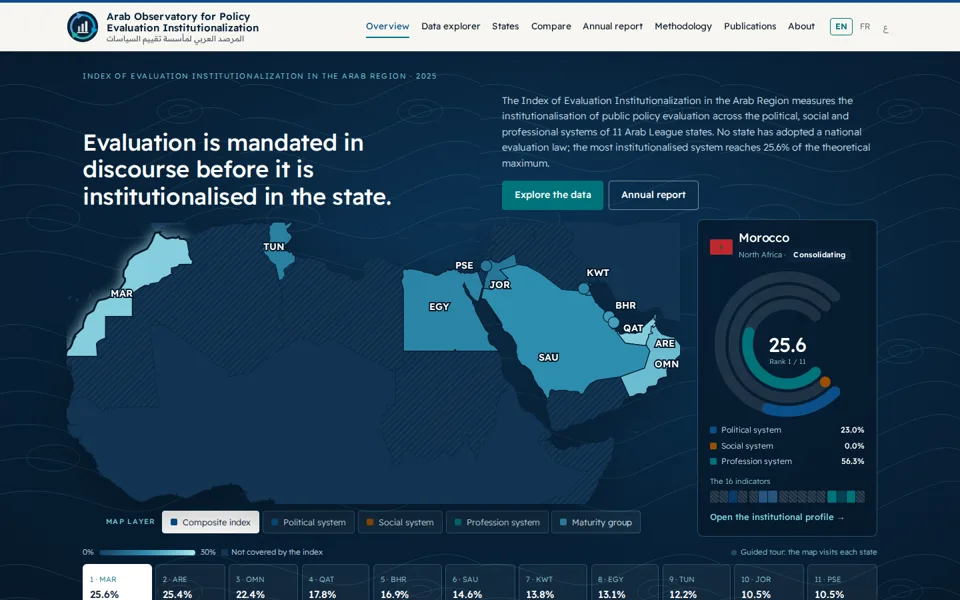
Evaluation institutionalisation across the Global South. The MENA Evaluation Index across 30 countries (mena-evaluation.com). Founding President of the Global South Evaluation Society (2,500+ scholars, 40+ countries) and President of the MENA Evaluation Association. Evaluation methods, capacity, generalisability, and decolonising practice.

Current Affiliations
Visiting Professor · UC BerkeleySchool of Social Welfare and Center for Middle Eastern Studies · 2026–Present
Research Affiliate · USI SwitzerlandInstitute of Communication and Public Policy · Faculty of Communication, Culture and Society
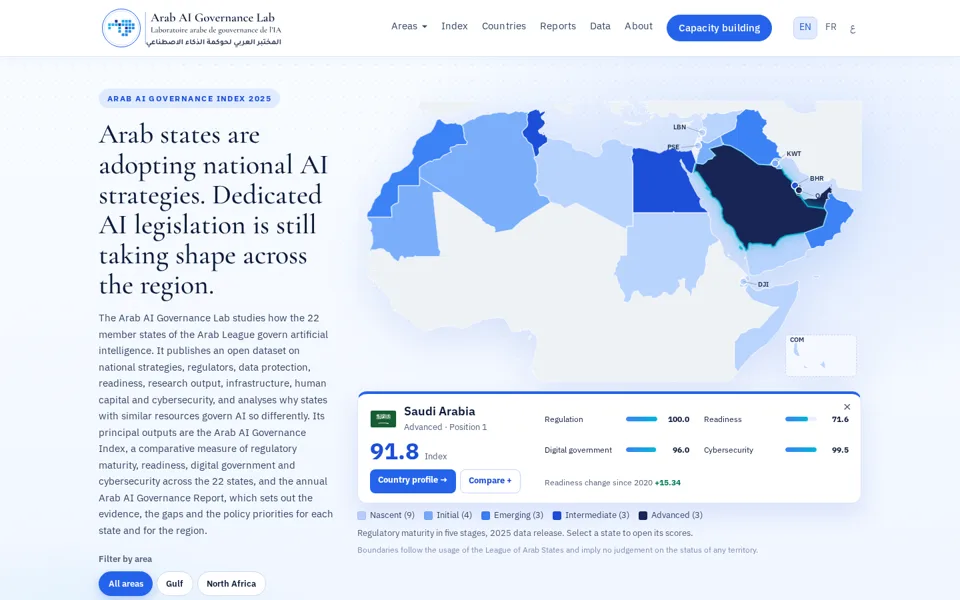
Founder & PI · Arab AI Governance & Society Labarablab.ai · The only academic AI governance laboratory in the Arab world
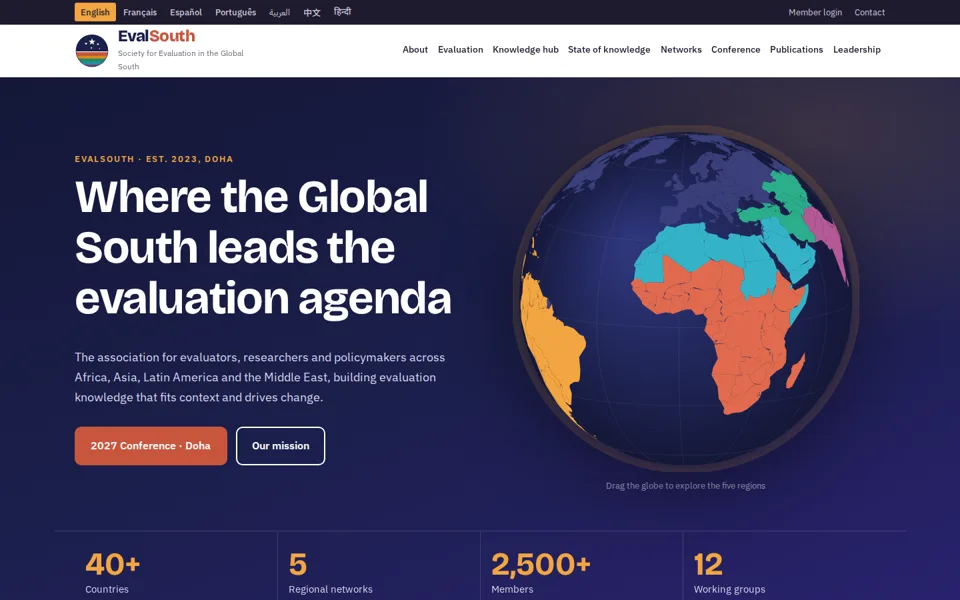
Founding President · Global South Evaluation Society2,500+ scholars · 40+ countries
President · MENA Evaluation Association2024–Present · 15 member countries
Co-Director · Emergency Preparedness Research (EPREP)Harvard T.H. Chan School of Public Health · 2023–Present
Academic Profile

Anis Ben Brik

Visiting Professor, UC Berkeley · Research Affiliate, USI Switzerland · PI & Founder, Arab AI Governance & Society Lab · Comparative Public Management · AI Governance & Society · Evaluation

Prof. Anis Ben Brik
Arab AI Lab
UC Berkeley

Prof. Anis Ben Brik

Comparative Public Management · AI Governance & Society · Evaluation
Visiting Professor · School of Social Welfare and Center for Middle Eastern Studies · UC Berkeley
Research Affiliate · Institute of Communication and Public Policy · Università della Svizzera italiana (USI), Switzerland
Founder & PI · Arab AI Governance & Society Lab
President · Global South Evaluation Society · President · MENA Evaluation Association
Biography

Anis Ben Brik is Visiting Professor at the School of Social Welfare and the Center for Middle Eastern Studies at the University of California, Berkeley, and Research Affiliate of the Institute of Communication and Public Policy at the Università della Svizzera italiana (USI), Switzerland. His research spans three connected programmes: comparative public management, AI governance and society, and evaluation. The work asks how public institutions function across varied contexts of authority and capacity; how AI policies, regulations, and societal effects unfold across uneven state capabilities; and how evaluation systems institutionalise evidence-based decision-making in the public sector.

The empirical scope is broad and comparative — spanning 30+ countries across MENA, the Gulf, the Global South, Europe, Asia, and the Americas. Methodologically, the work draws on configurational and comparative analysis, including fsQCA, latent profile analysis, supermodularity testing, process tracing, and mixed-methods research design. Across all three programmes, a recurring question concerns when formal institutional commitments translate into substantive practice, and what configurations of capacity, authority, and accountability infrastructure produce institutional translation.

Articles are in press or recently published at flagship public administration, evaluation, and AI governance outlets — including Public Management Review, Public Administration Review, Public Administration and Development, Public Organization Review, American Journal of Evaluation, Evaluation Review, Journal of Comparative Policy Analysis, European Policy Analysis, Regulation & Governance, AI & Society, and New Media & Society. Two anchor monographs are in press: The Algorithmic State in the MENA Region (Oxford University Press) and Governing the Machine: Democracy, Power, and the Regulation of Artificial Intelligence (NYU Press, Law and Public Policy Series).

The empirical centre of gravity is the Global South, supported by infrastructure he built and leads: the MENA Evaluation Institutionalization Index across thirty countries (mena-evaluation.com), the Arab AI Governance and Society Lab (arablab.ai), and the Global South Evaluation Society — 2,500 scholars across 40+ countries. He has raised competitive research funding across 15 projects, has delivered training in 21 countries on four continents, and has held senior public sector advisory positions including Senior Policy Advisor to the UAE Prime Minister's Office (2007–2014).

Visiting Professor · UC BerkeleySchool of Social Welfare and Center for Middle Eastern Studies · 2026–Present
Research Affiliate · USI SwitzerlandInstitute of Communication and Public Policy · Faculty of Communication, Culture and Society
Founder & PI · Arab AI Governance & Society Labarablab.ai · The only academic AI governance laboratory in the Arab world
Founding President · Global South Evaluation Society2022–Present · 2,500+ scholars · 40+ countries
President · MENA Evaluation Association2024–Present · 15 member countries
Co-Director · Emergency Preparedness Research (EPREP)Harvard T.H. Chan School of Public Health · 2023–Present
Research Programme · Connecting the Dots
Three programmes, one vision

Comparative public management, AI governance and society, and evaluation are not separate fields but three windows onto the same set of questions: how do public institutions work, how do they translate formal commitments into substantive practice, and how do we know whether they are delivering?

The empirical scope is broad and comparative — MENA, the Gulf, the Global South, Europe, Asia, and the Americas. Methodologically configurational and comparative: fsQCA, latent profile analysis, supermodularity testing, mixed methods, and process tracing across 30+ countries.

Programme I

Comparative Public Management

Network governance and administrative performance, public sector reform under uncertainty, implementation as instrumental repurposing, public service motivation, and hybrid governance arrangements. Articles in press at Public Management Review, Public Administration Review, Public Administration and Development, and Public Organization Review.

Programme II

AI Governance & Society

Cross-national analysis of AI governance, regulation, and societal effects across 22 Arab states and the Global South; algorithmic accountability; ethical charters as performative texts; sovereign LLMs; e-participation; and the social impacts of algorithmic systems. Two anchor monographs in press: The Algorithmic State (OUP) and Governing the Machine (NYU Press).

Programme III

Evaluation

Evaluation institutionalisation across the Global South. Performance management, accountability infrastructure, and the conditions under which evaluation systems produce evidence-based decision-making. The MENA Evaluation Index across 30 countries (mena-evaluation.com). Founding President of the Global South Evaluation Society (2,500 scholars, 40+ countries) and President of the MENA Evaluation Association.

Previous Academic Position
Prior to USI
Founding Director · PROSPER Research Centre
Hamad Bin Khalifa University (HBKU) · Qatar Foundation · Doha, Qatar
Founded and directed the PROSPER research centre at the College of Public Policy. Led research programmes in public management, AI governance, evaluation, and policy across the MENA region and the Global South. Elected Senator of the HBKU University Senate (2023).
Research Portfolio

Research Portfolio

Three connected programmes — comparative public management, AI governance and society, and evaluation — built around a unifying question: how do public institutions function, and when do formal commitments translate into substantive practice across diverse contexts?

The through-line

How do public institutions deliver under varying conditions of authority, capacity, and information? When do formal institutional commitments translate into substantive practice — in public management, AI governance, and evaluation systems alike?

The empirical centre of gravity is the Global South — supported by infrastructure I built and lead, including the MENA Evaluation Institutionalization Index across thirty countries, the Arab AI Governance and Society Lab, and the Global South Evaluation Society (2,500 scholars across 40+ countries). Methodologically configurational and comparative: fsQCA, latent profile analysis, supermodularity testing, mixed methods, and process tracing. Empirically grounded in 30+ countries across MENA, Sub-Saharan Africa, Asia, Latin America, North America, and Europe.

Programme I · Comparative Public Management

Comparative Public Management & Public Sector Reform

Two papers in press at Public Management Review · one at Public Administration Review · further at Public Administration and Development, Public Organization Review, Journal of Institutional Economics, Policy Design and Practice

Comparative public administration across MENA, the Gulf, the Global South, Europe, and the Americas. Network governance and administrative performance; public sector reform under uncertainty; implementation as instrumental repurposing; governance thresholds; public service motivation; hybrid governance arrangements across diverse institutional contexts; and configurational pathways through which substantive institutional translation succeeds.

Public Management ReviewIn Press
Network Structure and Public Management Performance under Concentrated Authority: Evidence from Gulf State Development Programmes
Public Management ReviewIn Press
Implementation as Instrumental Repurposing: Public Management Reform Under Extractive Institutional Orders
Public Administration ReviewIn Press
How Meritocratic Institutions Amplify Public Service Motivation Across Countries
Public Organization ReviewIn Press
The Governance Paradox: Modernization and Institutional Resilience in Rentier States
Journal of Institutional EconomicsIn Press
Institutional Complementarity or Substitutability? Testing Supermodularity in Rentier-Authoritarian Configurations
Public Administration and DevelopmentIn Press
Multiple Pathways to Effectiveness: A Configurational Analysis of Cash Transfer Implementation in the MENA Region
Policy Design and PracticeIn Press
Designing Policy Under Constraint: A Capacity-Design Fit Framework
Programme II · Evaluation

Evaluation Institutionalisation, Methods, and Public Sector Accountability

American Journal of Evaluation · Evaluation Review · Evaluation · Journal of Comparative Policy Analysis · Politics & Policy

The evaluation programme spans three layers: institutionalisation — how national evaluation systems are built, sustained, and absorbed into public-sector decision-making; methods — mixed methods, configurational analysis, generalisability and context-sensitivity, decolonising practice; and capacity — the conditions under which evaluation produces evidence-based policy. Anchored by the MENA Evaluation Institutionalization Index across 30 countries (mena-evaluation.com), the Global South Evaluation Society (2,500+ scholars, 40+ countries), and the MENA Evaluation Association.

American Journal of EvaluationIn Press
When Institutions Are Not Enough: Bottleneck Dynamics in Evaluation Capacity Across the MENA Region
Evaluation ReviewIn Press
Under What Conditions Does Evidence Travel? Assessing Context Sensitivity and Generalizability in Cash Transfer Program Effectiveness
Evaluation · 2025
Organisational determinants of evaluation maturity in the public sector: A resource-based perspective
Brik, A. B., & Hussein, M. (2025), 31(4), 539–558
Journal of Comparative Policy Analysis · 2025
Authority and accountability: Policy innovation through evaluation institutionalization in Gulf States
Ben Brik, A. (2025), 1–25
Politics & Policy · 2025
Deconstructing policy evaluation in the Global South: Historical, political, and transnational influences
Ben Brik, A. (2025), 53(5), e70061
Evaluation ReviewUnder Review
Four worlds of evaluation? A latent profile analysis of national evaluation capacity across 46 countries
Programme III · AI Governance & Society

AI Governance, Regulation & Society

European Policy Analysis · Regulation & Governance · AI & Society · New Media & Society · Information, Communication & Society · Government Information Quarterly · AI & Ethics

Cross-national analysis of how states build, regulate, and diffuse AI governance architectures — and how those architectures shape society. Regulatory governance of emerging technologies; algorithmic accountability; ethical charters as performative texts; sovereign LLMs and digital identity; e-participation; data protection; and the social, cultural, and democratic impacts of algorithmic systems across the Arab world and the Global South.

Anchor monographs in press: The Algorithmic State in the MENA Region: Politics, Governance, Society and Futures (Oxford University Press); Governing the Machine: Democracy, Power, and the Regulation of Artificial Intelligence (NYU Press, Law and Public Policy Series).

European Policy AnalysisIn Press
Governance Models Travel, Capacities Do Not: Europeanisation Mechanisms in AI Policy
Regulation & GovernanceUnder Review
Indicator-driven isomorphism: The form-function gap in AI governance across the Global South
AI & SocietyR&R
The accountability dispersal thesis: Algorithmic governance, power, and human agency in MENA
AI & SocietyUnder Review
Language models, national narrative, and the discursive construction of AI governance in the Gulf States
New Media & SocietyUnder Review
Ethical charters as performative texts: A comparative discourse analysis of AI ethics frameworks in the Arab world
Information, Communication & SocietyUnder Review
The sovereignty paradox: Sovereign LLMs and the construction of Arab digital identity
Government Information QuarterlyUnder Review
E-participation, AI, and the mediation of citizen-state discourse in the Arab world
Journal of Common Market StudiesR&R
Transfer mechanism type and AI governance convergence under EU conditionality
18+
Books
OUP · NYU · Cambridge · Elgar · Springer · Routledge
10
In Press
Flagship public administration journals
30+
Countries
Comparative empirical work
22
Arab States
arablab.ai
Scholarly Output

Publications

18+ books with Oxford UP, NYU Press, Cambridge UP, Edward Elgar, Springer, and Routledge · peer-reviewed journal articles in Q1 and Q2 outlets · 10 papers in press at flagship public administration outlets · book chapters · spanning comparative public management, AI governance and society, and evaluation.

Books — 15 Volumes

Forthcoming Monographs

Monograph · Oxford University Press · Forthcoming
The Algorithmic State in the MENA Region: Politics, Governance, Society and Futures
Anis Ben Brik · OUP
How AI reshapes authoritarian governance, accountability, and human agency in MENA. Introduces the accountability dispersal thesis and five-type typology of algorithmic statehood.
Monograph15 datasetsTypology
Monograph · NYU Press · Law and Public Policy Series · Forthcoming
Governing the Machine: Democracy, Power, and the Regulation of Artificial Intelligence
Anis Ben Brik · NYU Press
First cross-national empirical analysis of how political institutions shape AI governance across 206 countries (2017–2024). Democracy-AI nexus. Panel FE, system GMM, spatial models.
Monograph206 countriesDemocracy-AI
Edited Book · Edward Elgar Publishing · May 2026 · ISBN 9781035366842
Anis Ben Brik · Edward Elgar · Open Access
Foundational comparative governance framework for MENA — institutional analysis, comparative statics, and policy process models underpinning the broader research programme.
Edited BookOpen Access

Forthcoming Oxford Handbooks

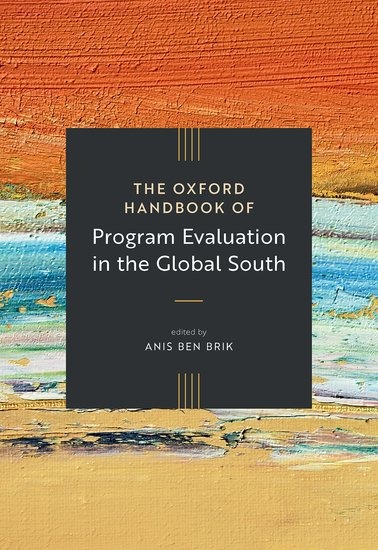
Edited Handbook · Oxford University Press · Forthcoming
Oxford Handbook of Program Evaluations in the Global South
Anis Ben Brik · Oxford University Press
Methodologies and practices in program evaluation tailored to the Global South — a comprehensive scholarly resource across Africa, Asia, Latin America, and MENA.
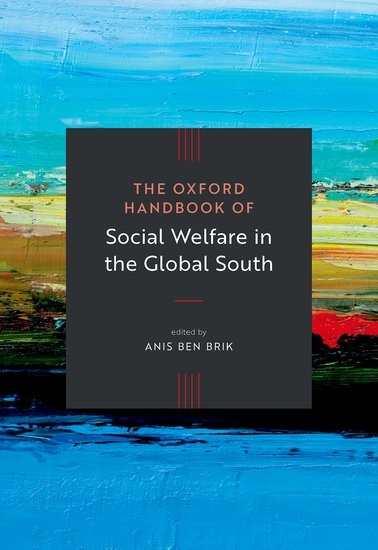
Edited Handbook · Oxford University Press · Forthcoming
Oxford Handbook of Social Welfare in the Global South
Anis Ben Brik · Oxford University Press
Essential scholarly guide to social welfare policies across the Global South — addressing the specific needs and aspirations of regions underrepresented in comparative welfare research.

Published Books 2021–2025

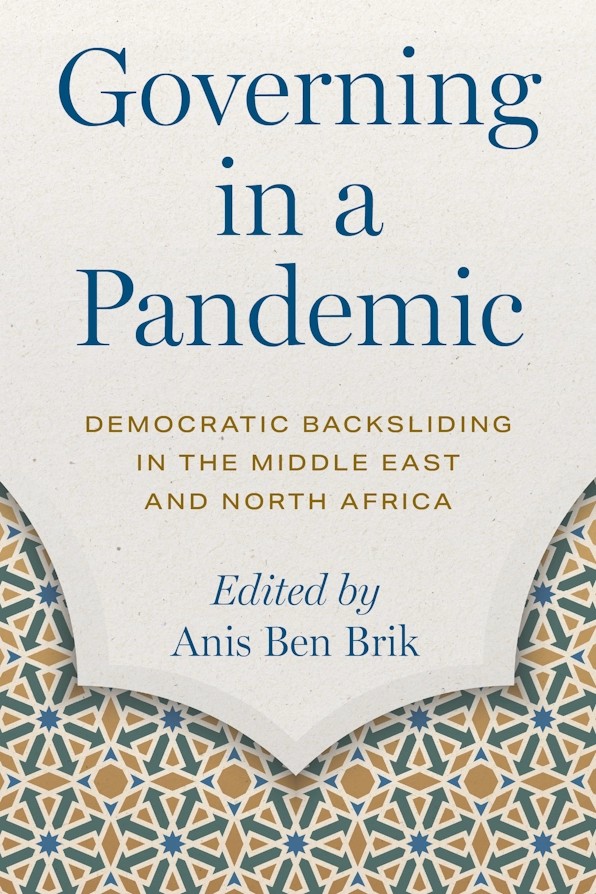
Edited Volume · NYU Press · 2025
Governing in a Pandemic: Democratic Backsliding in the Middle East and North Africa
Anis Ben Brik · NYU Press
Crisis governance in MENA — how authoritarian regimes exploit permacrisis through technocratic surveillance, symbolic spectacle, and narrative control.
Monograph · Springer · 2025 · Published
Anis Ben Brik · Springer · Gulf Studies Series
In-depth analysis of Qatar's social welfare system across nine sectors — the social contract, GCC modernisation, and the future of social protection in the Gulf.
Monograph · Springer · In Press
Social Welfare in Saudi Arabia
Anis Ben Brik · Springer · Gulf Studies Series
Systematic analysis of social welfare governance in Saudi Arabia across the welfare state sectors.
Monograph · Springer · In Press
Social Welfare in the United Arab Emirates
Anis Ben Brik · Springer · Gulf Studies Series
Comparative welfare state analysis of social protection systems in the UAE.
Monograph · Edward Elgar · 2025
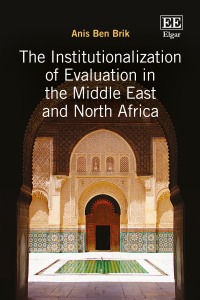
The Institutionalization of Evaluation in the Middle East and North Africa
Anis Ben Brik · Edward Elgar Publishing
Institutional frameworks supporting evaluation practice in MENA countries and the role of governance structures in building evaluation capacity.
Edited Handbook · Edward Elgar · 2025
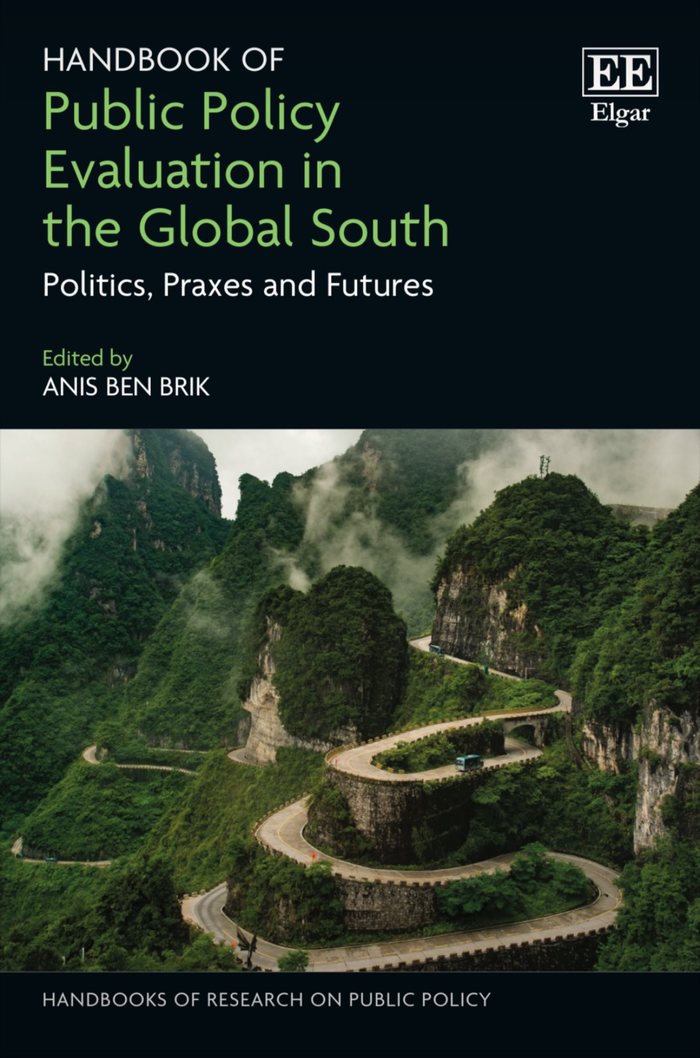
Handbook of Public Policy Evaluation in the Global South
Anis Ben Brik · Edward Elgar Publishing
Comprehensive examination of public policy evaluation across Africa, Asia, Latin America, and the Middle East — a landmark reference in Global South evaluation studies.
Edited Volume · Policy Press · 2025
Public Policy Evaluation in the Middle East and North Africa
Anis Ben Brik · Policy Press
How political regimes, administrative traditions, and policy advisory systems shape evaluation processes across MENA.
Edited Volume · Edward Elgar · 2024 · Open Access
Silent Pain and Public Policy: Suicide and Social Welfare in the Middle East and North Africa
Anis Ben Brik · Edward Elgar Publishing
Critical examination of suicide prevention and social welfare systems in MENA — socioeconomic factors, political instability, gender disparities, and youth vulnerability.
Edited Volume · Routledge · 2024
The COVID-19 Pandemic in the Middle East and North Africa: Public Policy Responses
Anis Ben Brik · Routledge
Critical reflection on pandemic governance across MENA — governance capacity, legitimacy, and crisis response in a region reshaped by a decade of uprisings and conflict.
Edited Volume · Edward Elgar · 2024
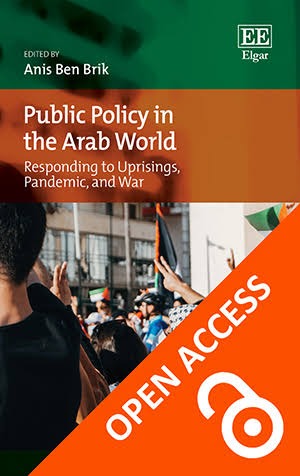
Public Policy in the Arab World: Responding to Uprisings, Pandemic, and War
Anis Ben Brik · Edward Elgar Publishing
Governance capacity, legitimacy, and crisis response mechanisms during the Arab Spring and COVID-19 pandemic.
Edited Volume · Routledge · 2024
Families and Social Change in the Gulf Region
Anis Ben Brik · Routledge
Family structures and social transformations in the GCC countries — modernisation, traditional systems, and the Gulf social contract.
Monograph · Springer · In Press
Social Welfare in Kuwait
Anis Ben Brik · Springer · Gulf Studies Series
Monograph · Springer · In Press
Social Welfare in Bahrain
Anis Ben Brik · Springer · Gulf Studies Series
Monograph · Springer · In Press
Social Welfare in Oman
Anis Ben Brik · Springer · Gulf Studies Series
Edited Volume · Oxford University Press · In Press
Social Inclusion and Policy in the Middle East and North Africa: Impacts on Democracy and Society
Anis Ben Brik · Oxford University Press
Edited Volume · NYU Press · In Press
Policy Narratives in the MENA Region: Storytelling, Power, and Praxis
Anis Ben Brik · NYU Press
Monograph · Edward Elgar · In Press
The Institutionalization of Evaluation in the Middle East and North Africa
Anis Ben Brik · Edward Elgar Publishing
Co-edited with Leslie A. Pal · Edward Elgar · 2021
The Future of the Policy Sciences
Anis Ben Brik & Leslie A. Pal · Edward Elgar Publishing
Critical assessment of the limits of current theories in public policy — new models and perspectives for the future of the field.
Journal Articles · AI Governance & Society
In Press
AI & SocietyIn Press
Language models, national narrative, and the discursive construction of AI governance in the Gulf States
Ben Brik, A., Fyderek, Ł., Gilbert, N., Pycińska, M., Brown, C. T., & Liang, H. (2025).
New Media & SocietyIn Press
Ethical charters as performative texts: A comparative discourse analysis of AI ethics frameworks in the Arab world
Ben Brik, A. et al. (2025).
Information, Communication & SocietyIn Press
The sovereignty paradox: Sovereign LLMs and the construction of Arab digital identity
Ben Brik, A. et al. (2025).
Government Information QuarterlyIn Press
E-participation, AI, and the mediation of citizen-state discourse in the Arab world
Ben Brik, A. et al. (2025).
Revise & Resubmit
AI & SocietyR&R
The accountability dispersal thesis: How algorithmic governance reshapes power, discourse, and human agency in MENA
Ben Brik, A. et al. (2025).
New Media & SocietyR&R
The human in the machine: Competing philosophies of human oversight and moral agency in Arab AI regulation
Ben Brik, A. et al. (2025).
Information, Communication & SocietyR&R
Absent voices, algorithmic futures: AI governance and the erasure of conflict-affected societies in Arab digital modernity
Ben Brik, A. et al. (2025).
Under Review
AI & EthicsUnder Review
Data as dignity: Personal data protection laws and the construction of the digital self in the Arab world
Ben Brik, A. et al. (2025).
Journal Articles · Comparative Public Management
Public Management ReviewIn Press
Network Structure and Public Management Performance under Concentrated Authority
Public Management ReviewIn Press
Implementation as Instrumental Repurposing: Public Management Reform Under Extractive Institutional Orders
Public Administration ReviewIn Press
How Meritocratic Institutions Amplify Public Service Motivation Across Countries
Public Organization ReviewIn Press
The Governance Paradox: Modernization and Institutional Resilience in Comparative Perspective
Public Administration and DevelopmentIn Press
Multiple Pathways to Effectiveness: A Configurational Analysis of Cash Transfer Implementation in the MENA Region
Policy Design and PracticeIn Press
Designing Policy Under Constraint: A Capacity-Design Fit Framework
Journal of Institutional EconomicsIn Press
Institutional Complementarity or Substitutability? Testing Supermodularity in Comparative Configurations
Journal Articles · Evaluation
American Journal of EvaluationIn Press
When Institutions Are Not Enough: Bottleneck Dynamics in Evaluation Capacity Across the MENA Region
Evaluation ReviewIn Press
Under What Conditions Does Evidence Travel? Assessing Context Sensitivity and Generalizability in Cash Transfer Programme Effectiveness
Evaluation · 2025
Organisational determinants of evaluation maturity in the public sector: A resource-based perspective
Brik, A. B., & Hussein, M. (2025), 31(4), 539–558
Journal of Comparative Policy Analysis · 2025
Authority and accountability: Policy innovation through evaluation institutionalization in Gulf States
Ben Brik, A. (2025), 1–25
Politics & Policy · 2025
Deconstructing policy evaluation in the Global South: Historical, political, and transnational influences
Ben Brik, A. (2025), 53(5), e70061
Evaluation ReviewUnder Review
Four worlds of evaluation? A latent profile analysis of national evaluation capacity across 46 countries
Global Leadership

Leadership & Service

Leading transformative initiatives across international organisations, evaluation networks, and policy institutions — from the UN to the European Commission, from MENA to the Global South.

Current International Leadership
2026–Present
Principal Investigator & Founder
Arab AI Governance & Society Lab — arablab.ai
Founded the first multi-method research programme mapping AI governance, regulation, and societal impacts across all 22 Arab League member states. Integrates 14 datasets, fsQCA configurational analysis, and a five-type governance typology — the most comprehensive comparative AI governance evidence base assembled for the Arab world.
2024–Present
President
MENA Evaluation Association
Founded and leading the first regional evaluation association — 300+ experts from 22 Arab countries.
2022–Present
President
Global South Evaluation Society
500+ evaluation experts from 80 countries. Annual budget $2 million. First master's in evaluation in the Global South.
2025–Present
Founding Leader
MENA Policy Research Group · International Institute for Public Policy Sciences
100+ experts from 25 countries developing innovative policies and frameworks for MENA.
2018–Present
Regional Partner for the Middle East
UN NGO Major Group · United Nations
Representing the Arab region in international forums and coordinating regional input in global policy discussions.
2024–Present
Advisory Board Member
SACRED Project · European Commission
Transforming elderly care through digital learning across Europe.
2019–Present
Board Member
European Network of Social Authorities (ENSA) · European Commission
Developing European-Arab cooperation in social policy and governance.
2016–Present
Board Member
International Network for Social Policy Teaching & Research
100+ universities and research institutions from 60 countries.
2013–Present
Founding Member & Vice President
MENA Social Policy Network
First regional network in social policies — 200+ members across MENA.
Previous Positions
2020–2025
Founding Director · PROSPER Research Centre
Hamad Bin Khalifa University (HBKU) · Qatar Foundation · Doha, Qatar
Founded and directed the PROSPER research centre at the College of Public Policy. Elected Senator, HBKU University Senate (2023).
2015–2019
Director, Family Policy Department
Doha International Family Institute (DIFI) · Qatar Foundation · Doha, Qatar
Led family policy research, regional analysis, and capacity-building programmes across the Arab world.
2014–2015
Assistant Professor of Sociology
United Arab Emirates University (UAEU) · Al Ain, UAE
Teaching and research in public policy, governance, and social policy.
Prior
Faculty Member
Canadian University of Dubai · Dubai, UAE
Teaching and research in governance and public policy.
2007–2014
Senior Policy Advisor
Prime Minister's Office · Ministry of Presidential Affairs · UAE
National policy research including the Social Cohesion and Happiness Index. Member, UAE-World Bank Labor Policy Reform Committee.
International Presentations

Speaking & Lectures

100+ international presentations across 50+ countries — from UN headquarters in New York to Oxford, Singapore, Delhi, Rabat, and Brussels.

2024 – 2025
Keynote
Political Crises and Institutional Governance in Tunisia and Egypt
IPSA 75th Anniversary Conference
Featured
Digital Government Transformation in MENA: Trends, Challenges, and Policy Solutions
4th International Workshop on Public Policy, IPPA
Panel
Policy Evaluation Practices in the MENA Region
4th Global Evaluation Forum · Rabat, Morocco
Keynote
Advancing Policy Evaluation in the Global South
EVALFEST · Delhi, India
Lecture
AI in the MENA Region: Charting the Path of Digital Transformation
Balsillie School of International Affairs · Waterloo, Canada · 2023
Lecture
Social Protection in the Middle East: Problems, Policies and Challenges
The Colegio de Jalisco · Mexico · 2024
2022 – 2023
Keynote
Decolonizing Evaluation in the MENA Region: Case Studies of Indigenous-Led Evaluations
27th World Congress of Political Science · IPSA
Research
Family Resilience and Parental Stress During COVID-19
XX ISA World Congress of Sociology
2019 & Earlier
Keynote
Role of Family Policies in Youth Transition in the Arab Region
UN High-Level Political Forum · New York
Keynote
Parenting Programmes in MENA
UNICEF MENA · Amman, Jordan
Guest Lecture
Evaluation of Parenting Interventions in the Arab Region
University of Oxford · UK
Research Seminar
Family Policies and Social Protection in Gulf Countries
National University of Singapore
Keynote · UN
Impact of COVID-19 on Families and Children
UN Commission for Social Development · New York
Academic Teaching

Teaching

Courses across three pillars — comparative public management, AI governance and society, and evaluation — plus advanced research methods (mixed methods, fsQCA, LPA, SEM). Teaching evaluations 4.8–5.0/5.0. Harvard Bok Center Certificate in University Teaching. Instruction in English, Arabic, and French.

Courses I Can Offer · Public Management
PM 01
Comparative Public Management
Comparative analysis of public management across institutional contexts — MENA, the Gulf, Europe, the Americas, and the Global South. Network governance, administrative performance, public sector reform under uncertainty, and the institutional conditions under which public management produces effective outcomes.
  • Apply comparative frameworks to analyse public management across diverse contexts
  • Evaluate network governance arrangements and administrative performance
  • Examine public sector reform trajectories under conditions of uncertainty
  • Develop a configurational analysis of an empirical case
PM 02
Public Sector Reform & Innovation
Theory and practice of public sector reform across the Global South. Implementation as instrumental repurposing, capacity-design fit, public service motivation, and the form-function gap between formal reform commitments and substantive practice. Case studies from Gulf development programmes, MENA institutional reforms, and comparative European experience.
  • Analyse competing models of public sector reform and their underlying assumptions
  • Diagnose capacity-design fit in real reform programmes
  • Evaluate the role of public service motivation in implementation outcomes
  • Design a reform proposal grounded in comparative evidence
PM 03
Network Governance & Performance Management
How public organisations coordinate across networks, manage performance, and generate accountability. Hybrid governance arrangements, inter-organisational coordination, performance measurement systems, and the institutional architecture that supports — or undermines — performance.
  • Map network structures across public, private, and non-profit actors
  • Analyse performance management systems and their behavioural effects
  • Evaluate accountability mechanisms in hybrid governance arrangements
  • Apply network analysis methods to a public-sector case
PM 04
Comparative Public Policy & Policy Design
Cross-national analysis of policy formation, design, and implementation. Policy transfer, policy learning, the politics of policy choice, and the conditions under which policies travel across institutional contexts. Designed for graduate students in public policy, public administration, and political science.
  • Compare policy choices across countries using systematic frameworks
  • Apply policy transfer theory to recent cases
  • Design a policy intervention with attention to capacity-design fit
  • Evaluate the political economy of policy reform
Courses I Can Offer · Evaluation
EV 01
Foundations of Programme Evaluation
Introduction to evaluation theory, design, and practice. Logic models, theory of change, evaluation purposes (formative, summative, developmental), stakeholder engagement, and the institutional role of evaluation in evidence-based decision-making. Grounded in real-world programme cases from MENA, the Global South, and comparative international practice.
  • Articulate the purposes, audiences, and uses of evaluation
  • Develop logic models and theories of change for real programmes
  • Design evaluation studies that match purpose, context, and audience
  • Apply ethical and political analysis to evaluation practice
EV 02
Advanced Evaluation Methods
Mixed-methods evaluation design and advanced analytical techniques: configurational analysis (fsQCA), latent profile analysis, contribution analysis, realist evaluation, and quasi-experimental designs. Emphasis on context-sensitive methods suited to complex public-sector and Global South settings.
  • Select methods that fit purpose, context, and evidence demands
  • Apply fsQCA to multi-case evaluation problems
  • Design quasi-experimental and realist evaluations
  • Integrate qualitative and quantitative evidence in mixed-methods studies
EV 03
Evaluation Institutionalisation & National Capacity
How evaluation systems are built, sustained, and absorbed into public-sector decision-making. The MENA Evaluation Institutionalization Index, comparative national evaluation systems, evaluation capacity-building, and the institutional architecture that supports evidence-based policy.
  • Analyse national evaluation systems using comparative frameworks
  • Diagnose institutional bottlenecks in evaluation capacity
  • Design evaluation capacity-building strategies for the public sector
  • Apply the MENA Evaluation Index methodology to a country case
EV 04
Decolonising Evaluation in the Global South
Critical perspectives on evaluation as a transnational practice. The historical and political construction of evaluation knowledge, indigenous and Global South approaches, the politics of evidence travel, and the question of generalisability across contexts.
  • Analyse the historical and political construction of mainstream evaluation
  • Apply decolonial and indigenous frameworks to evaluation design
  • Critically assess generalisability claims across contexts
  • Design a context-sensitive evaluation grounded in local knowledge systems
Courses I Can Offer · AI Governance & Society
AI 01
AI Ethics in the Arab World
Competing philosophical traditions — Islamic ethics, liberal individualism, and technocratic governance — and their implications for regulating algorithmic systems across the Gulf and broader MENA region. Examines AI ethics not as a universal standard but as a site of cultural, political, and philosophical contestation.
  • Critically examine competing ethical traditions shaping AI regulation in the Arab world
  • Analyse AI ethics frameworks as performative texts and legitimacy devices
  • Compare Islamic, liberal, and technocratic approaches to moral agency in algorithmic systems
  • Evaluate the gap between ethical charter promise and institutional accountability
AI 02
Algorithms, Identity & the Global South
How AI systems construct, mediate, and erase cultural identities. Sovereign language models, data colonialism, digital selfhood, and the politics of recognition beyond Western frameworks. Examines how algorithmic power operates in postcolonial, authoritarian, and resource-constrained contexts.
  • Analyse how AI systems construct and erase cultural and national identities
  • Examine sovereign LLMs as instruments of digital nationalism
  • Apply postcolonial and decolonial frameworks to algorithmic governance
  • Evaluate data colonialism and digital selfhood in Global South contexts
AI 03
Critical Perspectives on Digital Governance
The politics of measurement, the performativity of regulatory frameworks, and the gap between governance promises and institutional reality. Students learn to read AI policy documents, readiness indices, and governance frameworks as political texts.
  • Interrogate AI readiness indices and governance metrics as political constructs
  • Apply STS, critical discourse analysis, and institutional theory to AI policy
  • Identify the form-function gap in national and international AI governance
  • Produce original critical analysis of a governance document or framework
AI 04
Media, Power & Technology in the Middle East
How media systems and digital technologies reshape state-society relations across the Arab world. Crisis governance and information control, sovereign AI strategies, digital authoritarianism, and the role of communication in political transition.
  • Analyse how digital technologies mediate state-society relations in the Arab world
  • Examine sovereign AI strategies as instruments of political communication
  • Apply digital authoritarianism theory to MENA governance contexts
  • Evaluate media systems and information control during crisis and conflict
Additional Courses Taught
Area Studies · History & Politics

History, Politics and Cultures of the Middle East

Historical and political analysis of the Middle East from the Ottoman era to the present — state formation, colonialism, independence movements, authoritarianism, and the contemporary politics of the Arab world.

Politics & Area Studies

Politics of the Middle East

Comparative political analysis of governance, authoritarianism, reform, and state-society relations across the Arab world and broader Middle East region.

Area Studies · Gulf

Gulf Studies

Political economy, governance, social transformation, and foreign policy of the Gulf Cooperation Council states — rentier systems, labour migration, digital governance, and Vision-era reforms.

Sociology & Communication

Sociology of Communication

How communication systems shape and are shaped by social structures, institutions, and power. Media sociology, digital communication, and the sociology of information in comparative perspective.

Comparative Politics

Comparative Politics

Systematic comparison of political systems, institutions, and behaviour across states — democratic theory, authoritarianism, regime transitions, and political economy in global context.

Graduate

Comparative Public Policy

Cross-national policy comparison with focus on MENA, developed vs. developing states, and comparative institutional analysis.

Research Methods Courses
Methods
Quantitative Research Methods

Statistical reasoning, research design, and quantitative analysis for social and policy science. Survey methods, experimental design, regression analysis, and data interpretation.

Methods
Qualitative Research Methods

Interpretive and critical approaches to social inquiry. Ethnography, case study, discourse analysis, comparative case studies, and mixed-method designs in communication and policy research.

Methods
Advanced Statistics

Advanced statistical modelling for social scientists. Multivariate methods, panel data, structural equation modelling, fsQCA, and quantitative text analysis applied to governance and communication research.

Methods
Advanced Research Methods and Statistics

Integrative doctoral-level course spanning research design, causal inference, advanced quantitative and qualitative methods, and mixed-methods approaches. Emphasis on publishable research and methodological pluralism.

Graduate & Executive Courses
Graduate

Advanced Methods for Program Evaluation

RCTs, quasi-experimental methods, and SPSS labs for professional evaluators.

Executive · Georgetown Qatar

What Works: Program Evaluation for Policy Managers

Georgetown University School of Foreign Service in Qatar.

Executive · HBKU

Program Evaluation: Determining What Works

Executive education course in evidence-based program and policy evaluation.

Get in Touch

Contact

Open to research collaborations, speaking engagements, and academic partnerships across public management, public policy evaluation, AI governance, welfare systems, and crisis governance — in MENA, the Gulf, the Global South, Europe, and beyond.

Research Enquiries · USI Switzerland
Institution
Università della Svizzera italiana (USI)
Faculty of Communication, Culture and Society
Institute of Communication and Public Policy
Lugano, Switzerland
Research Lab
arablab.ai — Arab AI Governance & Society Lab
Areas of Collaboration
AI Governance & Regulation
Arab World & MENA Studies
Global South Policy
Communication & AI Ethics
Conference Speaking · Academic Partnerships
Send a Message